Showing posts with label video games. Show all posts
Showing posts with label video games. Show all posts
Thursday, September 29, 2011
Losing The Legend: Too Linked To The Past?


Wednesday, July 13, 2011
"Reefer Madness" L.A. Noire DLC Review: Quick Fix
For a game that is steeped in crime syndicates, the morphine trade, and murder the existence of marijuana trafficking almost seems irrelevant by comparison. No, I'm not using that introduction to make a case for the legalization of marijuana...man. Even if it is totally natural, I mean why not just ban topsoil and tree and stuff, right? Don't the cops have bigger fish to fry? Well, Cole Phelps certainly does, but that doesn't mean he can't take a break from uncovering the corruption in the city of angels to put an end to a Tijuana drug operation. In the final - but maybe not really - expansion to Team Bondi's magnificent L.A. Noire, "Reefer Madness," we take a trip back to the vice desk to crack down on the sale of that ol' wacky tabbacky.
Tuesday, June 7, 2011
Assault on E3 2011: Nintendo Announces the WiiU
At this year's E3 Nintendo just kind of, sort of announced their new console: the WiiU. Supposedly this machine is a successor to the Nintendo Wii (missed nostalgia opportunity to call it the Super Nintendo Wii), but the focus of the conference was placed primarily on the new controller. This new device is a pad with two joy sticks, looking like a beefed up Playstation Vita that Sony showed off just a night prior. In what seems to be an attempt to fire back at Apple's dominance over the non-gaming electronic market, the new controller will also be a touch pad. What is really mind blowing, according to Nintendo representatives, is that the actual console can be playing some other form of media while the controller itself runs an actual WiiU game. Nintendo did not explain how this works, though I would have to guess that the two devices still need to be within some range of one another otherwise the 3DS seems to have become a bit more irrelevant (despite the announcements of a great slate of games earlier in the press conference).
What I was most impressed with was Nintendo's ability to make me ask questions, to become curious. Regardless of what the WiiU turns out to be, EA higher ups have touted that it will finally have an "open online community" that hopefully negates friend codes, I want to know what it is and I want to get my hands on the product. Since the console itself was not showcased at the press conference, and no price was announced, my guess would be that the 2012 window they are setting for its launch will happen around holiday worldwide, but that is complete speculation on my part. I'm sure as E3 continues and more members of the press get a hands on with the controller we will learn more -Reggie Fils-Aime, just seconds ago, confirmed that the WiiU will put out a 1080p signal, but right now I'm mostly just baffled that I am both surprised and excited for a new Nintendo product after being stung by the Wii in the past.
Here's what I'm interested in, friends: what do you expect from the WiiU? What would make it a successful console in your eyes?
What I was most impressed with was Nintendo's ability to make me ask questions, to become curious. Regardless of what the WiiU turns out to be, EA higher ups have touted that it will finally have an "open online community" that hopefully negates friend codes, I want to know what it is and I want to get my hands on the product. Since the console itself was not showcased at the press conference, and no price was announced, my guess would be that the 2012 window they are setting for its launch will happen around holiday worldwide, but that is complete speculation on my part. I'm sure as E3 continues and more members of the press get a hands on with the controller we will learn more -Reggie Fils-Aime, just seconds ago, confirmed that the WiiU will put out a 1080p signal, but right now I'm mostly just baffled that I am both surprised and excited for a new Nintendo product after being stung by the Wii in the past.
Here's what I'm interested in, friends: what do you expect from the WiiU? What would make it a successful console in your eyes?
Friday, April 1, 2011
From Noir To Noire: A Call For Critics
Video games, we've come a long way. Remember those days when we spent hours together, just going through all those same sections of Princess Tomato: Adventures in Salad Kingdom because we lost that save level code that I wrote down in a game manual that, all these NES-less years later, still has not been found? Or how about when you first told me I had to switch discs, and I sat wondering if I should save, shut off the console, and then switch because I had ruined that old copy of Croc: Legend of the Gobbos when youthful curiosity told me I should open the PSX disc tray while playing? And do you remember that time when we went to the movies together, I was waiting for the NCAA tournament to finish in hopes that my bracket would hold up so that I could buy the popcorn for once? Wait. You don't remember that last one? That's probably because it hasn't happened, at least not yet. But soon, so very soon.
 Gamasutra, Joystiq, and a myriad of other sources have recently posted articles about the upcoming screening of the upcoming Team Bondi developed/Rockstar published game L.A. Noire to be held at the 2011 Tribeca Film Festival on April 25th. Naturally this could easily be used to fuel the ongoing debate about the artistic merits of video games, but I'm not here to settle that debate. I repeat: THIS POST WILL NOT ARGUE FOR OR AGAINST GAMES AS ART. I am firmly, completely, on the side that games, as a form of culture, are an artistic medium, and from this position I plan on exploring what the inclusion of L.A. Noire in the Tribeca lineup may potentially mean for the future of video games, and some of the pitfalls that the medium needs to avoid as it continues to evolve as an artistic medium.
For years game developers, critics, and casual players have bared witness to new trends in interactive story telling. Ken Levine and Gabe Newell have surrounded players in story, excising cut scenes from their games and asking the player to 'live' in the moment. Other developers, personal idol Hideo Kojima for example, have taken the traditional cut scene formula and expanded them in to blocks of time that encompass the length of a traditional film. And somewhere in the middle we have cut scenes that seemingly never end, keeping the player detached from the main character while still maintaining an active part in the storytelling process. A game like Heavy Rain or various Point and Click adventures seem to fit this bill, as does, from what little has been revealed about the actual gameplay, L.A. Noire. And we seem to know less than that about how the game will be showcased at the Tribeca Film Festival.
 But we know it will be there.
What does this mean though? It means that a cavalcade of critics and the public will have a chance to see the game in action. It means more exposure, and likely more sales, for the newest Rockstar joint. It means that a completely new form of media has a chance to share the spotlight with some interesting upcoming filmmakers and other veteran crafters. And, just maybe, it means that video games are one step closer to being recognized, on a larger scale, as a type of text capable of being approached, discussed, and examined as works from some of the most well known artists in recorded history. Shakespeare, Faulkner, Twain, Welles, Hawkes, Kurosawa, and even contemporary artists like the Andersons, McCarthys, and Dylans of the world. That's quite a bit of pressure for a game that has not yet been released. However, the pressure is not what concerns me. No, I am concerned with the ongoing trend in games to attempt to legitimize their existence as art by identifying with film criticism.
 The comparisons to film in interactive storytelling are easy to find, both forms are visual mediums, both need to pay attention to the construction of frame and the use of score, both maintain a sense of control over the player/viewer. But by attempting to stand alongside film, video games seem less like an original entity and occasionally come off as a strange mutation that, by the very nature of the medium, resists the language to be discussed on a wider level. So while the exposure for L.A. Noire, and video games as a whole, is fantastic, the larger problem of being nearly absent of academic language is left unaddressed, and as a result I fear that this opportunity to help develop the construction of a specified language may be squandered in favor of another rush to try and coexist in a resistant medium, serving as a toddler attempting, repeatedly, to squeeze a star shaped block into a square hole in the hope that the board will eventually become so worn down that it just accepts.
Now I understand that film and literature have had at least one hundred years to develop their own critical languages. Despite being in the seventh console generation video games are still in their infancy, and video game criticism is still in a period of flux. I read magazines and websites, and the majority of criticism I come across is superficial. They are filled with reviews, not criticism. Critics talk about graphics, gameplay, and replayability, all important in evaluating the technical merits of a game, but when that is the entire focus of an article games lose that chance to advance the conversation. Criticism doesn't generate traffic, at least not as much as a review would, and the majority of people reading the reviews, no matter which cultural medium we are discussing, just want to know whether a product is worth buying, but this time I would say that taking a look at modern film criticism is not only warranted, but practically required.
 I have a confession. When Roger Ebert wrote about video games never being able to exist as art, the blog post that launched a thousand angry comments, I was a bit infuriated; however, regardless of Ebert's position on the medium, he is one of the key figures that video game criticism needs to look at if any journalist ever hopes to elevate the conversation beyond technical jargon and hollow final scores. In all of Ebert's criticism, both classic - using the term classic is probably the most applicable in binary talk, but pretty damn frightening when describing a critic who continues to operate at a prolific level - and contemporary, addresses all the technical elements in film. His reviews mention direction, cinematography, editing, performances, and he even arrives at an easily consumable star rating, but interspersed in his writing Ebert offers commentary about the social topics films discuss, the thematic material that occupies the screen, it extends the conversation while still remaining accessible and fulfilling for casual readers. Games have the technical language, the next step is blending that technical language with critical and theoretical talks. How do the controls correspond to the narrative? What does the art style mean in relation to the themes? These are the questions this new criticism can, and at times does, answer.
Another route, obviously, is for games to be recognized on a scholarly level. Studies have been conducted to measure the addictiveness of games, or if games cause violent tendencies in players, but these are all scientifically grounded projects. You don't tackle Shakespeare with science, you confront him with liberal arts. The trouble, it has been argued, with games is that difficulty settings require skills which deny some individuals the experience, and while this is true, I think we are overlooking a much larger problem: finances. The console war, while great for the companies involved, makes the cost to enter insanely high. If a professor assigns a student to play Metal Gear Solid 4 before the next class and this student does not own a PS3, completing the assignment is going to be near impossible. Consoles aren't going anywhere. Less games are remaining console exclusives, but the first party titles are always going to exist. But since game studies can be both scientific and artistic, college budgeting a certain part of money to buying a few consoles for student access is not a farfetched scenario. And trust me, a new game is usually cheaper than many of the used books that students will be fighting to buy when classes start up. An ideal solution? Hardly. But it's a start, and as the medium grows I'm sure access will flourish.
 Right now L.A. Noire screening at Tribeca is huge, and who knows, in a few years when video games and video game criticism have outgrown all of those outfits we got at the shower this event may be remembered as the turning point. Or it may fade in to obscurity. I cannot predict the future, I can only hope, aspire, and work towards a world where games have this language, where they house these discussions, where they are no longer niche. Maybe it all starts with a visit to the movie theater, I just hope it doesn't end with that trip. I can only eat so much popcorn.
Thanks for taking the time to read. As a reader, your feedback is my writing's lifeblood, so let me know what you think down in the comments section below.
And if you can't get enough of me you can follow me on twitter at FLYmeatwad and check out Processed Grass, my blog on all things film, music, and non-videogame related culture, or my Poem A Day blog for all your poetry needs.
 Gamasutra, Joystiq, and a myriad of other sources have recently posted articles about the upcoming screening of the upcoming Team Bondi developed/Rockstar published game L.A. Noire to be held at the 2011 Tribeca Film Festival on April 25th. Naturally this could easily be used to fuel the ongoing debate about the artistic merits of video games, but I'm not here to settle that debate. I repeat: THIS POST WILL NOT ARGUE FOR OR AGAINST GAMES AS ART. I am firmly, completely, on the side that games, as a form of culture, are an artistic medium, and from this position I plan on exploring what the inclusion of L.A. Noire in the Tribeca lineup may potentially mean for the future of video games, and some of the pitfalls that the medium needs to avoid as it continues to evolve as an artistic medium.
For years game developers, critics, and casual players have bared witness to new trends in interactive story telling. Ken Levine and Gabe Newell have surrounded players in story, excising cut scenes from their games and asking the player to 'live' in the moment. Other developers, personal idol Hideo Kojima for example, have taken the traditional cut scene formula and expanded them in to blocks of time that encompass the length of a traditional film. And somewhere in the middle we have cut scenes that seemingly never end, keeping the player detached from the main character while still maintaining an active part in the storytelling process. A game like Heavy Rain or various Point and Click adventures seem to fit this bill, as does, from what little has been revealed about the actual gameplay, L.A. Noire. And we seem to know less than that about how the game will be showcased at the Tribeca Film Festival.
 But we know it will be there.
What does this mean though? It means that a cavalcade of critics and the public will have a chance to see the game in action. It means more exposure, and likely more sales, for the newest Rockstar joint. It means that a completely new form of media has a chance to share the spotlight with some interesting upcoming filmmakers and other veteran crafters. And, just maybe, it means that video games are one step closer to being recognized, on a larger scale, as a type of text capable of being approached, discussed, and examined as works from some of the most well known artists in recorded history. Shakespeare, Faulkner, Twain, Welles, Hawkes, Kurosawa, and even contemporary artists like the Andersons, McCarthys, and Dylans of the world. That's quite a bit of pressure for a game that has not yet been released. However, the pressure is not what concerns me. No, I am concerned with the ongoing trend in games to attempt to legitimize their existence as art by identifying with film criticism.
 The comparisons to film in interactive storytelling are easy to find, both forms are visual mediums, both need to pay attention to the construction of frame and the use of score, both maintain a sense of control over the player/viewer. But by attempting to stand alongside film, video games seem less like an original entity and occasionally come off as a strange mutation that, by the very nature of the medium, resists the language to be discussed on a wider level. So while the exposure for L.A. Noire, and video games as a whole, is fantastic, the larger problem of being nearly absent of academic language is left unaddressed, and as a result I fear that this opportunity to help develop the construction of a specified language may be squandered in favor of another rush to try and coexist in a resistant medium, serving as a toddler attempting, repeatedly, to squeeze a star shaped block into a square hole in the hope that the board will eventually become so worn down that it just accepts.
Now I understand that film and literature have had at least one hundred years to develop their own critical languages. Despite being in the seventh console generation video games are still in their infancy, and video game criticism is still in a period of flux. I read magazines and websites, and the majority of criticism I come across is superficial. They are filled with reviews, not criticism. Critics talk about graphics, gameplay, and replayability, all important in evaluating the technical merits of a game, but when that is the entire focus of an article games lose that chance to advance the conversation. Criticism doesn't generate traffic, at least not as much as a review would, and the majority of people reading the reviews, no matter which cultural medium we are discussing, just want to know whether a product is worth buying, but this time I would say that taking a look at modern film criticism is not only warranted, but practically required.
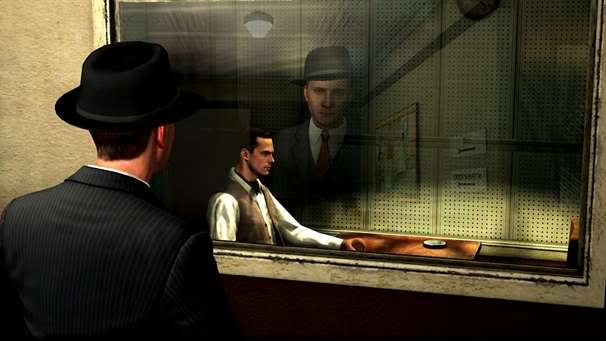 I have a confession. When Roger Ebert wrote about video games never being able to exist as art, the blog post that launched a thousand angry comments, I was a bit infuriated; however, regardless of Ebert's position on the medium, he is one of the key figures that video game criticism needs to look at if any journalist ever hopes to elevate the conversation beyond technical jargon and hollow final scores. In all of Ebert's criticism, both classic - using the term classic is probably the most applicable in binary talk, but pretty damn frightening when describing a critic who continues to operate at a prolific level - and contemporary, addresses all the technical elements in film. His reviews mention direction, cinematography, editing, performances, and he even arrives at an easily consumable star rating, but interspersed in his writing Ebert offers commentary about the social topics films discuss, the thematic material that occupies the screen, it extends the conversation while still remaining accessible and fulfilling for casual readers. Games have the technical language, the next step is blending that technical language with critical and theoretical talks. How do the controls correspond to the narrative? What does the art style mean in relation to the themes? These are the questions this new criticism can, and at times does, answer.
Another route, obviously, is for games to be recognized on a scholarly level. Studies have been conducted to measure the addictiveness of games, or if games cause violent tendencies in players, but these are all scientifically grounded projects. You don't tackle Shakespeare with science, you confront him with liberal arts. The trouble, it has been argued, with games is that difficulty settings require skills which deny some individuals the experience, and while this is true, I think we are overlooking a much larger problem: finances. The console war, while great for the companies involved, makes the cost to enter insanely high. If a professor assigns a student to play Metal Gear Solid 4 before the next class and this student does not own a PS3, completing the assignment is going to be near impossible. Consoles aren't going anywhere. Less games are remaining console exclusives, but the first party titles are always going to exist. But since game studies can be both scientific and artistic, college budgeting a certain part of money to buying a few consoles for student access is not a farfetched scenario. And trust me, a new game is usually cheaper than many of the used books that students will be fighting to buy when classes start up. An ideal solution? Hardly. But it's a start, and as the medium grows I'm sure access will flourish.
 Right now L.A. Noire screening at Tribeca is huge, and who knows, in a few years when video games and video game criticism have outgrown all of those outfits we got at the shower this event may be remembered as the turning point. Or it may fade in to obscurity. I cannot predict the future, I can only hope, aspire, and work towards a world where games have this language, where they house these discussions, where they are no longer niche. Maybe it all starts with a visit to the movie theater, I just hope it doesn't end with that trip. I can only eat so much popcorn.
Thanks for taking the time to read. As a reader, your feedback is my writing's lifeblood, so let me know what you think down in the comments section below.
And if you can't get enough of me you can follow me on twitter at FLYmeatwad and check out Processed Grass, my blog on all things film, music, and non-videogame related culture, or my Poem A Day blog for all your poetry needs.
Monday, March 28, 2011
I Have Two Big Hands And A Heart Pumping Blood
As I compile my Quarterly Review over at Processed Grass, I have come to the sad realization that in a world of digital downloads, bite-sized games, and tent pole January releases I have played one game released in 2011. Sure I have poked around at my backlog, finally getting a bit of time to dive in to Darksiders and Ratchet and Clank Future: A Crack in Time, but all I have ended up playing consistently has been Pokemon: Black Version, and before that a few Nintendo DS games that I had been meaning to spend a bit more time with before bigger releases overshadowed them. With the 3DS hitting the North American wilds just a day earlier I got to thinking about why it is, with so many options, I have spent so much time with my handheld lately.
The major reason, I believe, is the accessibility that a handheld offers. I don't have any problems asking it to share a night with me, but it won't get offended if I only have time for a quickie. The DS doesn't judge (the PSP, maybe, but the PSPMinis may take umbrage with that statement). I can relax in bed when I should be asleep and put a few more hours in to The World Ends With You, or if I really need to get to sleep popping in some Picross DS is a simple way to close off the day. I remember growing up and reading a book before going to bed, setting it down on the night side table and being carried away to that night's beautiful dark twisted fantasies. Perhaps it's indicative of the technology age that I now, despite finding darker and more twisted fantasies, do the same thing with the book shaped Nintendo DS. The action becomes habitual, cracking open the spine, turning on the light, and finding a small burst of gratification that builds toward a larger goal. Sure there are a few differences, but the process for reading before bed and playing DS are fairly similar.
Fairly joyful, always rewarding.
Rewarding because one of the reasons I love games - pause to remind readers that the Metal Gear Solid series houses four of my favorite games ever (including the top spot with MGS2) - is the way it allows me to experience a narrative. For me great game design is not about opening up a world entirely, or setting checkpoints that don't force me to replay frustrating portions of a game, they help, but that's not what makes a game 'work.' What handheld games, and many of my favorite console and PC games, benefit most from is that contract between developer and player that, I interpret, reads: 'Here is my vision. Savor the experience at your leisure, discover what I have tucked away in spots where many may gloss over, don't just stare at the pixels, enter the world.' Approachability and Accessibility. Whether I play for a five minute burst or a binge session I am moving the narrative along at my own pace.
Surely this is not the crux of good game design, but it is one of the qualities that I perceive to be much more prevalent in handheld gaming than it is in console games. When playing console games I feel I either need to choose between those concentrated bursts or the multi-hour binge sessions. My favorite game from last year, Super Meat Boy, was one that I felt blended both of these perfectly. The levels were all straight forward, but they were contained enough that I could sit down, play a couple of levels, and stop with a feeling of accomplishment. Similarly, the day I purchased the game I probably played it for three hours straight, and the satisfaction derived was neither more nor less than when I played in shorter bursts.
Do I regret not taking the time to experience many of the year's most intriguing games so far? Of course, I think everyone who writes about games wishes there was more time for gaming. However, it's reassuring to know that even when life gets hectic, when final papers start piling up, when it seems like I have not booted up my consoles for close to a month, that my handheld is waiting for me to dump another hundred staggered hours in to Picross, Pokemon, Final Fantasy Tactics, or any of the other countless titles left to be experienced.
Thanks for taking the time to read. As a reader, your feedback is my writing's lifeblood, so let me know what you think down in the comments section below.
And if you can't get enough of me you can follow me on twitter at FLYmeatwad and check out Processed Grass, my blog on all things film, music, and non-videogame related culture, or my Poem A Day blog for all your poetry needs.
The major reason, I believe, is the accessibility that a handheld offers. I don't have any problems asking it to share a night with me, but it won't get offended if I only have time for a quickie. The DS doesn't judge (the PSP, maybe, but the PSPMinis may take umbrage with that statement). I can relax in bed when I should be asleep and put a few more hours in to The World Ends With You, or if I really need to get to sleep popping in some Picross DS is a simple way to close off the day. I remember growing up and reading a book before going to bed, setting it down on the night side table and being carried away to that night's beautiful dark twisted fantasies. Perhaps it's indicative of the technology age that I now, despite finding darker and more twisted fantasies, do the same thing with the book shaped Nintendo DS. The action becomes habitual, cracking open the spine, turning on the light, and finding a small burst of gratification that builds toward a larger goal. Sure there are a few differences, but the process for reading before bed and playing DS are fairly similar.
Fairly joyful, always rewarding.
Rewarding because one of the reasons I love games - pause to remind readers that the Metal Gear Solid series houses four of my favorite games ever (including the top spot with MGS2) - is the way it allows me to experience a narrative. For me great game design is not about opening up a world entirely, or setting checkpoints that don't force me to replay frustrating portions of a game, they help, but that's not what makes a game 'work.' What handheld games, and many of my favorite console and PC games, benefit most from is that contract between developer and player that, I interpret, reads: 'Here is my vision. Savor the experience at your leisure, discover what I have tucked away in spots where many may gloss over, don't just stare at the pixels, enter the world.' Approachability and Accessibility. Whether I play for a five minute burst or a binge session I am moving the narrative along at my own pace.
Surely this is not the crux of good game design, but it is one of the qualities that I perceive to be much more prevalent in handheld gaming than it is in console games. When playing console games I feel I either need to choose between those concentrated bursts or the multi-hour binge sessions. My favorite game from last year, Super Meat Boy, was one that I felt blended both of these perfectly. The levels were all straight forward, but they were contained enough that I could sit down, play a couple of levels, and stop with a feeling of accomplishment. Similarly, the day I purchased the game I probably played it for three hours straight, and the satisfaction derived was neither more nor less than when I played in shorter bursts.
Do I regret not taking the time to experience many of the year's most intriguing games so far? Of course, I think everyone who writes about games wishes there was more time for gaming. However, it's reassuring to know that even when life gets hectic, when final papers start piling up, when it seems like I have not booted up my consoles for close to a month, that my handheld is waiting for me to dump another hundred staggered hours in to Picross, Pokemon, Final Fantasy Tactics, or any of the other countless titles left to be experienced.
Thanks for taking the time to read. As a reader, your feedback is my writing's lifeblood, so let me know what you think down in the comments section below.
And if you can't get enough of me you can follow me on twitter at FLYmeatwad and check out Processed Grass, my blog on all things film, music, and non-videogame related culture, or my Poem A Day blog for all your poetry needs.
Tuesday, June 22, 2010
The FOXHOUND Chronicles - Metal Gear Marathon Introduction
In the 1960's Bob Dylan recorded three records that collectively have come to be recognized as one of the era's greatest cultural triumphs. Years later George Lucas's Star Wars films built a universe that captivated a nation. Even after that literature is revolutionized by the release of Twilight! All culture, good and bad, uses the series format to create worlds, explore complex themes, and even uncover a bit about humanity. I propose that, since Bob Dylan released his records all those years ago, no single individual has crafted as important a cultural touchstone as Hideo Kojima. In the form of the Metal Gear Solid series (and, I suppose I will soon discover, the Metal Gear series) Kojima displays a brilliant awareness of the world surrounding us all, traditional story telling techniques, and the uniqueness of the medium he uses to tell his stories.
I hope to apply a closer inspection of each game individually and in a larger context, discussing the artistic merits of Kojima's universe with a specific focus on the aspects that distinguish Kojima's games from those of his contemporaries and the similarities his works bear to other storytelling mediums. Combined with the man's one of a kind perspective these games not only transcend the medium, but also demand inclusion in the cultural cannon. Even more impressive is Kojima's future prospects, as he clearly is showing few signs of slowing down in his output, even if his time int he Metal Gear Solid universe is finally drawing to a slow close. Through weekly, or more depending on time, blog entries I will track my progress in these games (though mostly all are replays) and record my observations. At the conclusion of each game I will post a lengthy entry that is more focused on specific aspects of each game in relation to my larger goals.
Now to outline the list of what shall be played.


Tentative Entries:


Just to make a few comments so you better know where I am coming from:
1. I have never played Metal Gear or Metal Gear 2: Solid Snake
2. I have not decided if I am going to play Twin Snakes or just stick with the original Metal Gear Solid, though I'm leaning toward the PSX one to see, again, the jump between the two platforms.
3. I have never played through Subsistence, so I am looking forward to playing that one instead of the original Snake Eater, but if anyone thinks MGS3:SE is the 'right' version to play let me know in the comments with a short explanation.
4. I own a PSP, but with little memory and I do not own these games yet, so I do not know if I will have time for those entries at this point in time.
I am incredibly excited to share this examination with you and to hopefully accurately convey my respect, admiration, and love for Kojima's universe. I look forward to playing through many of these games again and I hope you enjoy reading my take on this wonderful cultural triumph.
Until the first official entry of my FOXHOUND Chronicles, take it easy,
Richard Thorne
For all reflections film and music be sure to check out my other blog Processed Grass and if you are looking for some nice reads you can peruse my Poem a Day blog filled with all original writings.
Be sure to follow me on Twitter as well for all extraneous musings at twitter.com/FLYmeatwad
I hope to apply a closer inspection of each game individually and in a larger context, discussing the artistic merits of Kojima's universe with a specific focus on the aspects that distinguish Kojima's games from those of his contemporaries and the similarities his works bear to other storytelling mediums. Combined with the man's one of a kind perspective these games not only transcend the medium, but also demand inclusion in the cultural cannon. Even more impressive is Kojima's future prospects, as he clearly is showing few signs of slowing down in his output, even if his time int he Metal Gear Solid universe is finally drawing to a slow close. Through weekly, or more depending on time, blog entries I will track my progress in these games (though mostly all are replays) and record my observations. At the conclusion of each game I will post a lengthy entry that is more focused on specific aspects of each game in relation to my larger goals.
Now to outline the list of what shall be played.

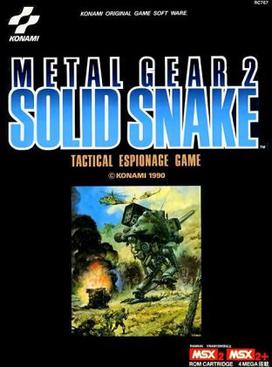

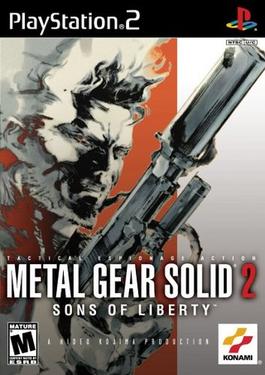


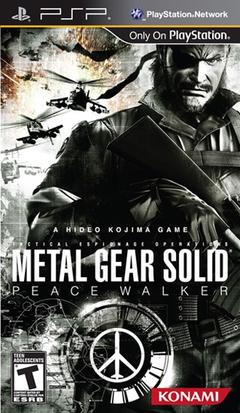
Tentative Entries:

Just to make a few comments so you better know where I am coming from:
1. I have never played Metal Gear or Metal Gear 2: Solid Snake
2. I have not decided if I am going to play Twin Snakes or just stick with the original Metal Gear Solid, though I'm leaning toward the PSX one to see, again, the jump between the two platforms.
3. I have never played through Subsistence, so I am looking forward to playing that one instead of the original Snake Eater, but if anyone thinks MGS3:SE is the 'right' version to play let me know in the comments with a short explanation.
4. I own a PSP, but with little memory and I do not own these games yet, so I do not know if I will have time for those entries at this point in time.
I am incredibly excited to share this examination with you and to hopefully accurately convey my respect, admiration, and love for Kojima's universe. I look forward to playing through many of these games again and I hope you enjoy reading my take on this wonderful cultural triumph.
Until the first official entry of my FOXHOUND Chronicles, take it easy,
Richard Thorne
For all reflections film and music be sure to check out my other blog Processed Grass and if you are looking for some nice reads you can peruse my Poem a Day blog filled with all original writings.
Be sure to follow me on Twitter as well for all extraneous musings at twitter.com/FLYmeatwad
Wednesday, July 2, 2008
Time to Wake Up: The Darkness, Reflections on Comics and Games

So I'm a bit behind schedule, but also finished Lost and picked up Naruto today, and I have finally finished my reflection on the video game adaptation of the comic series The Darkness. For future reference, I will be using the comic series in Italics and the video game in Bold.
A long time ago, when I was just a sperm concerned with getting inside a vagina to bring forth new life, the comic book industry thrived along with the arcade industry. The two cultures began to mesh as the arcade industry died down and some of the steam of mainstream comics began catering to a more devoted crowd. Flashing forward a little more than 18 years, one will notice very few of the things previously mentioned have changed. The video game industry continues to grow each year, Comic-Con and other festivals expand audiences yearly, and I am still primarily concerned about spreading life. However, both cultures continue to share one trait in common: comics and video games are niche markets. On a mainstream level the fans are sterotypical nerds and geeks who dress up as imaginary characters and rarely leave the home, only for D&D night, to wait in line for the next Star Wars film, or to LARP all over someone's face. The problem is, as most gamers/comic readers will tell you, that these stereotypes are flawed and very wrong. The casual fan is just as important to each industry, and with the influence of comics in other mediums the pairing of these two previously intertwined cultures seems obvious.
That brings us to The Darkness, and while Jackie Estacado does Believe in a Thing Called Love, it's not that kind of Darkness. I am going to begin this reflection with a technical review of the game. After a fairly exciting opening chase sequence, Jackie Estacado is explained to be a mafia hit man and given two pistols from a dying partner as a 21st birthday gift. Cue generic FPS. We are given a red dot in the middle of the screen, you fire, you run, you gun...for about one hallway. Suddenly the player hears a raspy voice as some light begins to fade. The Darkness has started to take over. While the introductory level is straightforward, and can grow very tedious due to mediocre gunplay, about 20 minutes in Jackie taps into The Darkness and things start to get interesting. Sure your pistols are still there, and you even have a shot gun, but there's nothing quite like using the Crawling Dark technique to slither around a level, take out an enemy with the single tap of a button and watch as your beast literally devours his heart.
You also have minions in the game, who are all a thrill to listen to, and the one that destroys lights is helpful, but the AI in these things makes Keanue Reeves seem like Albert Einstien by comparison. Also, you can find six different outfits throughout the game that come with a different weapon and suit for the Beserkers to dress up in, automatically of course. Apparently the spawn of Hell's mind not only look like burned monkey-imp hybrids who have spent too much time studying Jack Nicholson's Joker in the first Batman film, but they enjoy a nice game of dress up before slaughtering people. Sadly there are no tea parties in this game and the tone remains dark throughout.

Three additional powers are acquired throughout the game, each with its own use and enjoyment, though the controls, in all eight hours of playtime, never fully settled in for me, despite rigorous setting tweaks. Still, the undeniable charm of unleashing a black hole, rivaling the size and destructible power of Paris Hilton's own, on a large group of gun toting mobsters is a joy unto itself, complimented by the flying bodies and debris the technique leaves in its wake. Sure, the difficulty takes a hit, but the game wants you to feel like an unstoppable bad ass capable of tearing apart an entire army single handily. The best way to go about doing this is by staying in the dark to charge up your energy, in a fashion similar to the much beloved Riddik game. Also taking a page from the Butcher Bay Book, many of the characters in the game are able to be engaged in conversation, something many FPS games lack. Side quests are provided, the reward is usually a phone number you call up to get a humorous message that unlocks hidden content, but aren't necessary to complete the game. It should also be noted that the game looks pretty good, and unlike other games the loading screens are a treat to watch, though eventually a bit tedious as I can only hear about how Jackie drives with a crazy cabbie through Manhattan so many times. Still the game succeeds on more levels than it fails on, and can overcome shoddy FPS controls because of it's story.
Speaking of story, this is where the actual reflection comes in. I have zero knowledge of The Darkness universe or how the story works in the comics, but from what I hear the game stays fairly faithful to the first arc, just breaking a few things here and there, and a couple major changes. What I find impressive about the story though is, unlike other games in this marathon, even a non-fan such as myself had no problem following the events of the story and accepting the rules of the world. The Darkness doesn't always spell everything out for you, sometimes you have to fill in plot holes, but the ability to adapt, from a base source, material so well without sacrificing engaging gameplay is incredibly impressive. As an explanation, the nature of the genre does help. Spiderman games have succeeded in the past, as have Xmen games, but the first person perspective of the title does something that I imagine even the comic would fail at doing, and that is truly engrossing the player in the world and the experience. The game never lets you forget that you're playing Jackie Estacado, but seeing things through his eyes, and hearing The Darkness whispering in your ear while it slowly takes control over your body is a breathtaking feeling that few games are able to match.
The game is short, it only took about 8 hours to complete and it wasn't that hard, on medium, but the story was highly engaging and I never once questioned Jackie's driving force throughout the game. As such, I would not only call The Darkness an adaptation done right, if not for BioShock and CoD4 this very well may be the best FPS on the 360. The interesting thing is that the game did attempt to emulate the world of the comic, but 2K smartly allowed the player to experience the events of the game, so when The Darkness renders you immobile you don't watch, you are literally in that position. Considering I have a slate of Third Person games coming up, this game was a fantastic starting point and really showed what makes a comic game work in the video game world. Just as much as the story is important, actively engaging the player and drawing them in is an incredible technique and meshes both mediums together so well. Plus, taking a note from successful films, The Darkness has perhaps the best score and soundtrack to ever grace a video game, and certainly the best of any FPS I've played. A fantastic starting point, an enlightening experience, and an important lesson in the bigger picture of blending genres and licensed games.

It is also worth noting that The Darkness has a plot that may seem fairly generic, but works because of the depth mixed with the familiar feeling. The themes are more than love and revenge, the game effectively chronicles the extremes one man will go to for justice, however warped it may be by modern standards. Jackie's bout with The Darkness adds an interesting third party to the normal man v. man setup of most games and the poignancy of this struggle is echoed by many of the residents in New York. The Darkness is about breaking away, or the idea of breaking away, only to realize that a controlling force will always be there to resist and draw you in. Much like Jackie, many need to choose to accept it or continue on, no matter how futile the end renders the means. I don't know if any of the other games in the marathon will have the type of depth that The Darkness possesses, but this game is more than a simple adaption, it is a viable piece of culture that should be studied at a scholarly level.
I'm also looking forward to jumping into the comic world of The Darkness if I have a chance, though I think the best way to describe my time with this game has already been done by Mr. Estacado during one of the loading screens. "I love these subways. I had my first kiss here. It was with a hooker named Candy. She crossed her legs, broke my sunglasses. Good times." My time with the game was short, it seemed on the surface as little more than a cheap thrill, but it meant much more than what was on the outside.
Monday, June 30, 2008
Opening Day
Hello world and welcome to the first post on MultiPlatform, the blog geared towards an in-depth analysis and reflection on different forms of media. Instead of posting news, I have taken it upon myself to give a more concise perspective on specific topics going around a particular industry. Given the title of the blog, I will be most focused on video games, and rightly so since any formal type of analysis and criticism seems to not have found much acceptance in the industry. I am here to look at games in a different way, as more than a medium for enjoyment and instead as viable pieces of culture.
Now, video games will not be the sole focus. I plan on lumping together films and television in this blog on occasion and offering a perspective on trends of each subsequent industry. While I have not yet determined the best way to go about reflecting on each specific topic, I plan to start with the idea of 'mini-marathons.' Whether going through the decline of a previously popular medium and speculating on the interest of another, or simply examining specific genres, the marathon format would seem to give me the ability to make an accurate judgement with a variety of background information.
I reckon any readers would like to know a bit about the man behind the text, and as such I will oblige. My name is Rich and I am an 18 year old male from the state of New Jersey. Now for something you couldn't get by reading the little 'about me' tab a few inches over, you lazy bastards. I'm currently a student at TCNJ where I am majoring in English. I grew up playing video games and reading books, so after completing my first semester and being introduced to critical ways of reading literature, I figured that the video game industry could benefit from a more critical approach. As such, MultiPlatform was started on June 30th, 2008, which is good since we still have a few years to benefit from this knowledge before the Mayan Apocalypse falls down upon the masses. So yes, I live a fairly calm life and enjoy a little writing every once in a while. I also do a YouTube program called 'The College Gamer' and the 'Dorm Room Reflections' spin-off. I have another plan in the works at the moment, but it's still in alpha phase. The one thing that should be stated before continuing on to the meat of the blog, is that all of my work is as much for my own benefit as it is for the benefit of the reader/viewer. Feedback is always welcome and lovingly accepted, though hardly expected. As such, I plan to benefit from the discoveries made during any of my ventures, just as the reader/viewer benefits.
As such, I shall immediately get down to business by announcing the first project undertaken by the MultiPlatform blog. Video game will be examined, but more importantly I going to look at a series of licensed games, each based off a property that achieved success in a different medium, and offer reviews on each experience. At the end, I plan to take what I learned and come up with a comprehensive idea of why licensed games tend to succeed only on the commercial scale rather than the critical scale. It should also be noted that I will be focusing on 'modern' games rather than licensed games from the SNES backward, so yes, that means no Super Star Wars or GoldenEye. I will also note that the definition of 'modern' will change from time to time, as I consider console past the SNES/Genesis days to be modern, even if all consoles aren't reflected.
So here's the slate...
Licensed Video Games:
Thank you for reading MultiPlatform and I hope you enjoy the forthcoming entries and that your ideas of how games/films/shows 'be' is expanded, as is your knowledge of the respective industry.
Now, video games will not be the sole focus. I plan on lumping together films and television in this blog on occasion and offering a perspective on trends of each subsequent industry. While I have not yet determined the best way to go about reflecting on each specific topic, I plan to start with the idea of 'mini-marathons.' Whether going through the decline of a previously popular medium and speculating on the interest of another, or simply examining specific genres, the marathon format would seem to give me the ability to make an accurate judgement with a variety of background information.
I reckon any readers would like to know a bit about the man behind the text, and as such I will oblige. My name is Rich and I am an 18 year old male from the state of New Jersey. Now for something you couldn't get by reading the little 'about me' tab a few inches over, you lazy bastards. I'm currently a student at TCNJ where I am majoring in English. I grew up playing video games and reading books, so after completing my first semester and being introduced to critical ways of reading literature, I figured that the video game industry could benefit from a more critical approach. As such, MultiPlatform was started on June 30th, 2008, which is good since we still have a few years to benefit from this knowledge before the Mayan Apocalypse falls down upon the masses. So yes, I live a fairly calm life and enjoy a little writing every once in a while. I also do a YouTube program called 'The College Gamer' and the 'Dorm Room Reflections' spin-off. I have another plan in the works at the moment, but it's still in alpha phase. The one thing that should be stated before continuing on to the meat of the blog, is that all of my work is as much for my own benefit as it is for the benefit of the reader/viewer. Feedback is always welcome and lovingly accepted, though hardly expected. As such, I plan to benefit from the discoveries made during any of my ventures, just as the reader/viewer benefits.
As such, I shall immediately get down to business by announcing the first project undertaken by the MultiPlatform blog. Video game will be examined, but more importantly I going to look at a series of licensed games, each based off a property that achieved success in a different medium, and offer reviews on each experience. At the end, I plan to take what I learned and come up with a comprehensive idea of why licensed games tend to succeed only on the commercial scale rather than the critical scale. It should also be noted that I will be focusing on 'modern' games rather than licensed games from the SNES backward, so yes, that means no Super Star Wars or GoldenEye. I will also note that the definition of 'modern' will change from time to time, as I consider console past the SNES/Genesis days to be modern, even if all consoles aren't reflected.
So here's the slate...
Licensed Video Games:
- The Darkness (Xbox 360) - Representing comics
- Lost: Via Domus (Xbox 360) - Representing television
- Naruto: Rise of a Ninja (Xbox 360) - Representing anime/manga
- Harry Potter and the Order of the Phoenix (Xbox 360) - Representing film/literature
- POST ANALYSIS The Lord of the Rings: The Third Age (PS2) - Representing literature/film/distanced license
Thank you for reading MultiPlatform and I hope you enjoy the forthcoming entries and that your ideas of how games/films/shows 'be' is expanded, as is your knowledge of the respective industry.
Subscribe to:
Posts (Atom)

 Posts
Posts

